Thursday, July 17, 2014

Biotechnology+Art (Week 4)


The combination of art and biotech is not something unfamiliar. In recent years, there have always been reports about new researches in biotechnology. One work that surprised me was Eduardo Kac’s GFP Bunny. With the goal of creating an “animal that does not exist in nature,” he inserted the fluorescent jellyfish gene into the albino rabbit. Although he used transgenics as an artistic technique to show the limitless possibilities that human can achieve with new researches and technologies, his work raised a lot of concerns as people question the moralities and the scientific values behind such procedure. I think that all living organisms should be treated equally and scientists should not use animals to experiment just because they are not human. I think that because of works like the GFP Bunny and Microvenus, Joe Davis’s works of synthesizing DNA molecules to create art, a lot of people will question the future of this field.
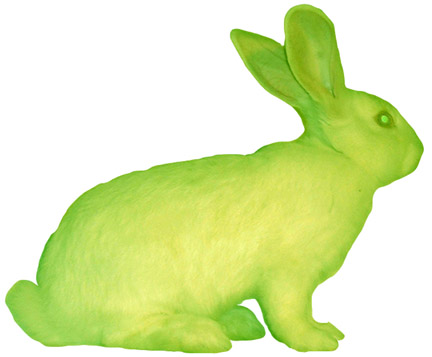
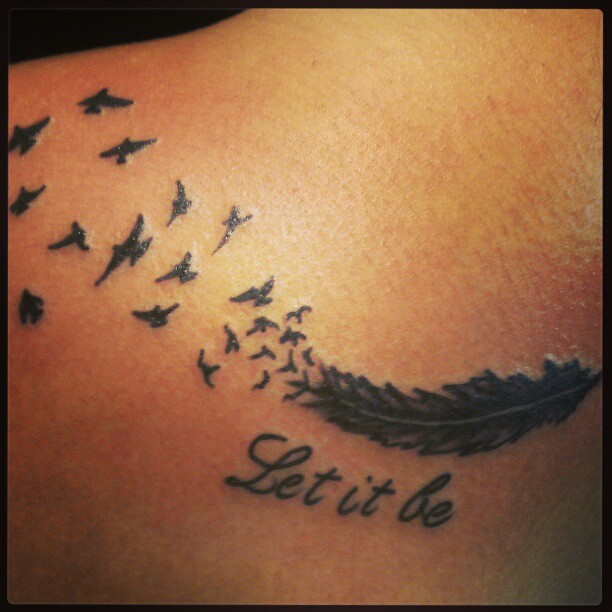
Although lack of scientific values, the GFP Bunny did prove that life itself is a valid expressive medium. The glowing green rabbit is a piece of art and it expresses Kac’s wish to create uniqueness in the world. Similarly, we also use ourselves as expressive mediums as people get tattoos and piercings. Both are ways in which we can manipulate our body in order to express how we feel inside.  
This also reminds me of Orlan. In the previous lecture, Professor Vesna mentioned how Orlan performs surgeries on herself in order to express her artistic feelings. This time, she further uses biotech to synthesis skin-like materials, in which she uses to create art and show uniqueness.

Aside from those interesting examples of combination between biotech and art, biotechnology has largely been used for medical researches and creating scientific materials, such as genetically modified food. Genetically modified food has always been hotly debated as people question its safety and the effects that the chemicals will have on our brain. 

Due to the public rejection towards biotech researches, many biologists started the “DIY Biology ‘movement’,” where they can experiment without the restrictions of traditional research institutions. However, although biotechnology has positive characteristics, we should still put a limit to human creativity, because if not, our creations might lead to the production of monstrous organisms, like the superweeds, that human will not unable to control.


Works Cited

Alba, The Fluorescent Bunny. Digital image. N.p., 2000. Web. 14 July 2014. <http://www.ekac.org/albagreen.jpeg>.

Davis, Joe. "Joe Davis: Genetics and Culture." Joe Davis: Genetics and Culture. Ars Electronica, n.d. Web. 14 July 2014.

Genetically Modified Food. Digital image. N.p., n.d. Web. 14 July 2014. <http://www.skepticalraptor.com/blog/wp-content/uploads/2012/12/gmo-tomato.jpg>.

Kac, Eduardo. "GFP BUNNY." KAC. Eduardo Kac, n.d. Web. 14 July 2014.

Kelty, Chris. "Meanings of Participation: Outlaw Biology?" (n.d.): n. pag. Web. 14 July 2014.

 “Let It Be” Tattoo. Digital image. N.p., n.d. Web. 14 July 2014. <http://sacramentotattooshops.com/wp-content/uploads/2014/01/tattoos-piercings-stylz.jpg>.


Vesna,Victoria. “Lecutre Part 3.“ MedTech + Art. 09 July 2014. Lecture.

Vesna,Victoria. “Lecutre Part 4.” Biotech + Art. 14 July 2014. Lecture.

Wenk, Gary. "This Is Your Brain on Food." SEED MAGAZINE. Seed Media Group, 13 Sept. 2010. Web. 14 July 2014.

Thursday, July 10, 2014

MedTech+Art (Week 3)

This week’s lecture was very eye-opening for me. I also had a few years of experience of drawing and I encountered the same question as Professor Vesna: why do I have to learn about the inner human body structures? After this week’s lecture, I found out that it is because the human body and the medical world are art. Ever since the ancient time, doctors record studies, findings, and patients’ records through drawings. They don’t have the advanced technologies to help them keep records like we do now, so they rely on hand-drawn pictures to help them record the patients’ illness. This relationship between art and medicine is further shown by the Hippocratic Oath, where medicine, for various times, is referred to as “art.”

We still use a lot of art in describing our inner body and the behaviors of various body parts in today’s medical world. In Drew Berry’s Body Code, the artist used computer animation to show the cells, DNA, and proteins in our bodies. New technology made it possible for us to see the actions of the microscopic cells, which would’ve been impossible in the past. I think that those animations themselves are art pieces as they show how amazing our body is. Similar technologies, such as X-rays, MRI’s, and CAT Scans, all allow us to “depict the unseen…[and] to provide access to” the inside of our bodies (Casini 74). Medicine is the art of body and technological advancements has helped us to better analyze this art.

Another obvious connection between art and medicine is cosmetic surgery. Although cosmetic surgery was first intended as a way for soldiers to repair the physical damages caused by war, in nowadays, it has changed to become a medium to beauty and perfections. People rely on cosmetic surgery to change their outer appearances into that of their dreams.
This Chinese advertisement shows the extremity of cosmetic surgery as it portrayed the parents as beautiful but the children as not so perfect. With its caption says “your only worry is how to explain this to your children,” the advertisement shows the danger of cosmetic surgery. There are many positive associations between art and the medical world as it enables us to learn about our bodies, but there also exist threats of the over-usage of medicine to achieve the art of perfection.


Works Cited

Ancient Medical Record. Digital image. N.p., n.d. Web. 09 July 2014. <http://www.messagetoeagle.com/images/preswcriptionstibet01.jpg>.

Berry, Drew. "Drew Berry - Body Code." Australian Centre For The Moving Image. ACMI, n.d. Web. 9 July 2014.

Body Code. Digital image. N.p., 2003. Web. 09 July 2014. <http://www.acmi.net.au/global/images/lib/img_tran_artdrewberry.jpg>.

Casini, Silvia. "Magnetic Resonance Imaging (MRI) as Mirror and Portrait: MRI Configurations between Science and the Arts." Configurations 19.1 (2011): 73-99. Web. 10 July 2014.

Chest X-Ray. Digital image. N.p., n.d. Web. 09 July 2014. <http://www.proactivecopd.com/style/images/upload/chest-x-ray.jpg>.

Cosmetic Surgery Advertisement. Digital image. N.p., n.d. Web. 09 July 2014. <http://2.zol-img.com.cn/product/88_450x337/468/cePx6TxdooSUo.jpg>.

Tyson, Peter. "The Hippocratic Oath Today." PBS. PBS, 27 Mar. 2001. Web. 08 July 2014.

Vesna,Victoria. “Lecutre Part 1.” MedTech + Art. 09 July 2014. Lecture.

Vesna,Victoria. “Lecutre Part 3.“ MedTech + Art. 09 July 2014. Lecture. 

Friday, July 4, 2014

Robotics+Math+Art (Week 2)

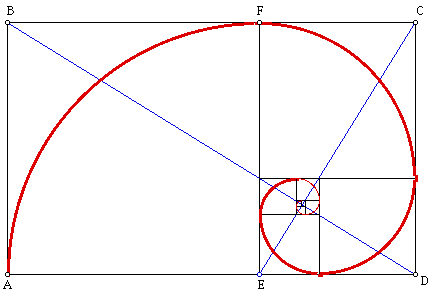
Before this week’s lecture, I used to always think that math and art exist as two completely unrelated fields. However, I learned from Professor Vesna’s lecture that art actually involves a lot of math, such as golden ratio and perspectives. Now that I learned about math and art, I noticed the numerous correlations between them. In my math class, we have to draw graphs to help us illustrate our calculations. In those graphs, many also utilize the golden ratio, as shown in the picture below. 


Furthermore, I learned from Escher’s works that art and math alike uses a lot of “reflections, glide reflections, translations, and rotations to obtain a greater variety of patterns.” All of these terms appear commonly in math, especially in geometry. However, I never realized that artists use them as well. They use them to create art and form different shapes to express themselves.

I especially found Robert J. Lang’s work very interesting. He analyzes the relationship between origami and math. Many mathematical concepts, such as Huzita-Justin Axioms, help to turn origami from a 2-dimensional paper into a visually pleasing 3-dimensional figure. Origami also avoids the problem that industrialization creates. It does not involve mass production and instead each pieces is made individually, making them unique. 


Furthermore, through this week’s lecture, I learned that industrialization is impossible without science. Industrialization relied on using scientific devices and technology to make mass production easier and faster. Henry Ford’s mass production of cars is a great example as he demonstrated the use of science in making an assembly line in 1913. However, although industrialization led to mass production, it caused negative effects as it took away individuality. It produced materials in factories and people no longer have to make each piece by hand. Even art no longer has to be painted individually and can be copied massively in factories.

In today’s world, math, industrialization, art and science intertwine with each other in order to grant us a comfortable living environment. Scientists constantly use math and industrialization to produce technology for improvement, but these technologies also need art to make them appealing. Like stated in Professor Kusahara’s presentation, robots are great examples that combine these different fields. It uses math and science for manufacturing and art for making the public accept and use them. In my own world, the juxtaposition is also apparent as the mass-produced technologies overwhelm everyone around me.
 
Works Cited

"Ford." The Evolution of Mass Production. Ford, n.d. Web. 04 July 2014. <http://www.ford.co.uk/experience-ford/heritage/evolutionofmassproduction>.

Golden Ratio Diagram. Digital image. N.p., n.d. Web. 04 July 2014. <http://jwilson.coe.uga.edu/emt669/student.folders/frietag.mark/homepage/goldenratio/image19.gif>.

Kusahara, Machiko. “Professor Machiko Kusahara on Japanese Robotics.” Robotics + Art. 04 July 2014. Lecture.

Lang, Robert J. "Robert J. Lang Origami." Robert J. Lang Origami. N.p., 2004. Web. 04 July 2014. <http://www.langorigami.com/>.

Mass Production of Cars. Digital image. N.p., n.d. Web. 24 June 2014. <http://www.johannes-pilz.com/portfolio/wp-content/uploads/2013/04/mass-production-300x168.jpg>.


Smith, B. Sidney. "The Mathematical Art of M.C. Escher." Platonic Realms Minitexts. Platonic Realms, 13 Mar 2014. Web. 04 July 2014. <http://platonicrealms.com/>.

Vesna,Victoria. “Lecutre Part 2.” Robotics + Art. 04 July 2014. Lecture.


Vesna,Victoria. “Lecutre.“ Math + Art. 04 July 2014. Lecture.

Tuesday, June 24, 2014

Two Cultures (Week 1)

I am a second-year Math Economics major at UCLA and I feel that I am very lucky to study this major because it allows me to experience both of the “two cultures.” My major requires me not only to compute numbers and analyze mathematical graphs, but it also requires me to write reports and report different economic situations through writing. I have to take various math classes in order for me to understand the numbers, analyze them, and create graphs that can demonstrate the current economic situations. I am not sure which path in economics I want to pursue in yet, but I am thinking of accounting, so math and numbers play important parts of my major. Similarly, writing skills are emphasized for my major as well. In addition to creating graphs, I have to be able to coherency explain each graph in words, and write detailed reports on what does the graph show, how does the graph reflect a problem, and how the problem can be solved. All of these requires the two cultures of both science and literary. Therefore, I am actually able to study in both the North and the South Campus. I really do enjoy this major because it is almost like I am double majoring. It allowed me to have more chances to explore a wider range of studies.


It is true that when Snow first published his idea back in 1959, the intellectuals of the time where split into two worlds occupied by “scientists and writers” on two extreme ends (2-4). However, I think that just like what Professor Vesna stated in her article and lecture, the distinction between these two cultures has blurred through constant improvement in education and new findings. I think that we all “contribute to the creation of a new, mutant third culture” (Vesna 122). We are the ones who will lead to future achievements, so by learning both literary and scientific knowledge in school, we close the gap between these two cultures. Even in college, this idea of well-rounded education still carries on with the requirement of general education. 

Furthermore, new findings close the gap between the literary world and the scientific world. Nowadays, scientists constantly develop new findings, such as medication and technologies, and like what Brockman said, “scientists are communicating…with the general public” (2). By incorporating science into daily lives, we live in the third culture that benefits from both of the worlds.

Works Cited

Williams, Christopher M. "A Dangerous Divide: The Two Cultures in the 21st Century." Academy eBriefings. The New York Academy of Sciences, 24 July 2009. Web. 24 June 2014. <http://www.nyas.org/Publications/Ebriefings/Detail.aspx?cid=74e271bd-4ba6-47cd-8f0a-add2ef8234cd>.

Graham-Rowe, Duncan. "John Brockman: Matchmaking with Science and Art." Wired March 2011 (2011): n. pag. Web. 24 June 2014.

Snow, C. P. The Two Cultures and the Scientific Revolution. New York: Cambridge UP, 1959. Print.

Vesna, Victoria. "Toward a Third Culture: Being in Between." Leonardo, Vol. 34, No. 2 (2001), pp. 121-125 The MIT Press. Web. 24 June 2014. <http://www.jstor.org/stable/1577014>.

Business Reports. Digital image. N.p., n.d. Web. 24 June 2014. <http://abhservicesinc.com/wp-content/uploads/2014/03/paper.jpg>.

Economic Graphs. Digital image. N.p., n.d. Web. 24 June 2014. <https://blogger.googleusercontent.com/img/b/R29vZ2xl/AVvXsEiwdPvBpifpYs-SvTnHcHq8i_PhZBvYmp4D7LBbrfe3xA7H_6L3R5pp0xOQ8r1d7wJnWlSF5e2CjQkDfr8vlDqFHyuthfNqf68uAOjV8WVqDaeXfJ30OlidFqqaakk7bkB2d0B4EFlH1wuC/s1600/31juluscaseshillerconcon.bmp>.

Technology and Medication. Digital image. N.p., n.d. Web. 24 June 2014. <http://www.healthcare-informatics.com/sites/healthcare-informatics.com/files/u509/DSC_1296.JPG>.